Vehicle Diagnostic Tool Guide for Car Fault Detection and Repair
Car repair has changed as vehicles now rely more on electronic control systems than mechanical parts. Control units frequently contain faults without having noticeable physical defects. This information can be accessed with a vehicle diagnostic tool, enabling the technician to get a head start on any problems and schedule repairs using real system data. It is now a standard part of both workshop and field repair work.
Reading stored fault information
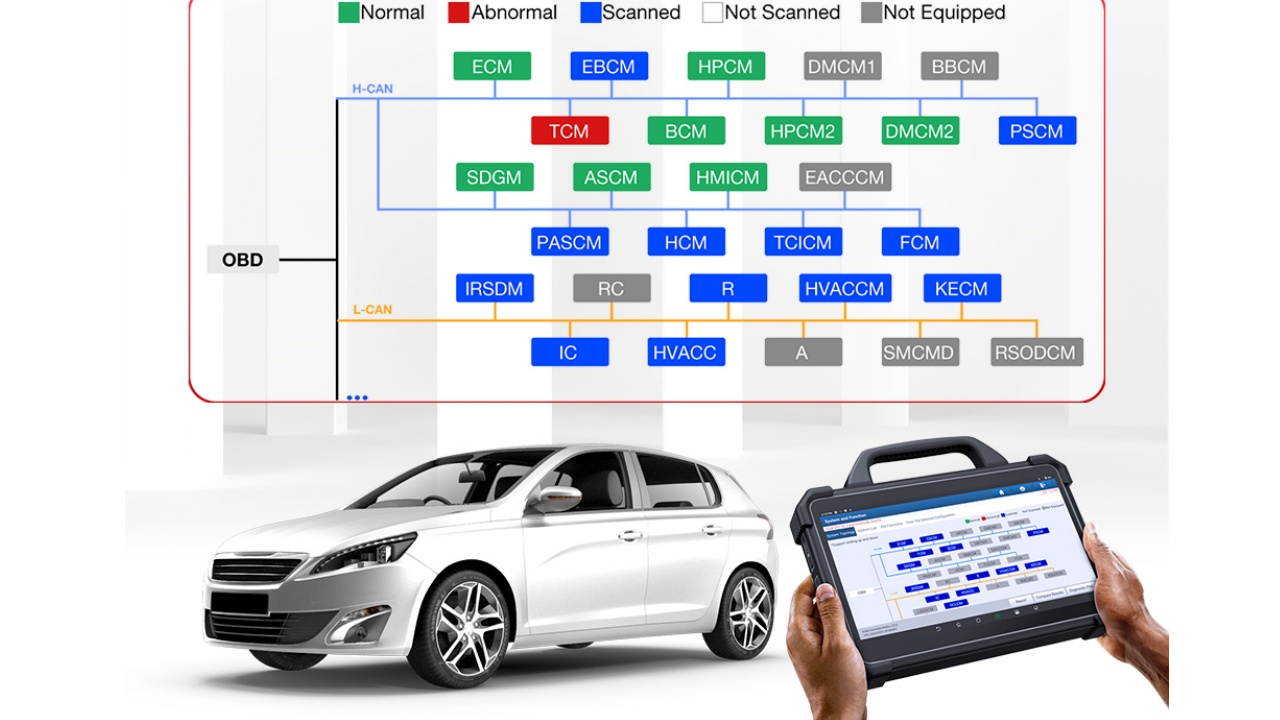
Most repair work starts by checking stored fault codes. The codes are stored if any irregularity is detected within the system. These codes are then read by the vehicle diagnostic tool, which indicates the system that has been affected, whether the engine control system or the brake system. With diagnostic equipment such as the LAUNCH X431 PAD VII 7 ELITE, the fault history of multiple systems can be scanned simultaneously. For distribution services managed by Lenkor, product verification can ensure uniformity in diagnostic outputs.
Identifying early warning signals
Not all faults cause immediate failure. Some systems store early warnings before a problem becomes serious. These early signs are detectable using diagnostic tools, allowing repair work to begin before damage occurs. This can really benefit in the long run by helping avoid long-lasting vehicle failures. This helps minimize the risk of replacing components that are still working.
Checking sensor performance
Sensors are utilized to measure and indicate temperature, pressure, and motion within modern cars. When sensors send out wrong data, many functions can be affected. Each sensor is tested individually to verify that its signal is stable. This helps to establish whether the issue lies with the sensor or with the system connected to it.
Verifying repair results
Once the repairs are complete, it is very important to test the system to ensure the problems have indeed been resolved. This involves clearing fault codes as well as a recheck of system status using diagnostic tools. Occurrence of error signals indicates that the problem has not yet been addressed.
Monitoring system behavior during operation
There are a handful of problems that can only be identified while driving. These issues can be detected by using diagnostic equipment that allows technicians to monitor system readings without stopping the engine. This includes monitoring readings of airflow, fuel performance, and temperature changes. It helps detect irregular patterns that are not apparent when the vehicle is stationary.
Communication between control units
Vehicles contain multiple control units that must share information. If communication breaks, certain features may stop working. A diagnostic tool checks how these units interact and identifies where communication breaks down. This is useful when diagnosing problems affecting multiple systems simultaneously.
Resetting system settings after repair
The system must be reset after replacing any part to adapt to the new part. These processes involve adjusting the steering or resetting the throttle, for example. If not done, the vehicle may run on the old calibration data. Reset functions are commonly included in modern diagnostic tools.
ECU-level repair access
Some repair tasks require deeper system access. This includes updating or reprogramming control units. Tools that support ECU-level functions allow technicians to adjust software settings when modules are replaced. Devices such as the LAUNCH X431 PAD VII 7 ELITE are used in these cases to support structured programming tasks through standard communication protocols.
Use in different repair environments
Vehicle diagnostic tools are used in both fixed workshops and mobile repair setups. In workshops, they are part of full repair processes, while in mobile work, they are used for quick checks and basic fault identification. The difference lies in the available time and working conditions rather than in the tool’s core function.
Distribution and support structure
Access to diagnostic tools depends on the reliability of supplies and the availability of support. Lenkor operates as a trading company and focuses on providing original products through verified channels. It handles overseas warehouse distribution and after-sales service, thereby minimizing tool delivery delays and facilitating after-sales support for users across regions.
Conclusion
Vehicle diagnostic tools are essential in today’s car maintenance, providing access to information within systems that is not available through mere physical inspection. They aid in fault detection, repair verification, and vehicle resets for various vehicle types. The LAUNCH X431 PAD VII 7 ELITE is an example of the high-end system-level access used in professional repair settings. Support infrastructure, such as the distribution system and support provided by a company like Lenkor, is also essential for making equipment available and authentic and for providing a consistent service across repair networks.